Table of Contents
- What is VAT in the UAE?
- Benefits of VAT in the UAE
- What is Excise Tax in the UAE?
- Benefits of Excise Tax in the UAE
- Key Differences Between VAT and Excise Tax in the UAE
- Products Covered Under VAT and Excise Tax in the UAE
- Products Covered Under Excise Tax in the UAE
- Key Difference in Product Coverage
- How do Excise Tax and VAT Work Together in the UAE?
- Why Understanding the Difference Matters in the UAE (Excise Tax vs VAT)?
- Excise Tax vs VAT in UAE: Key Takeaways by Shuraa Tax
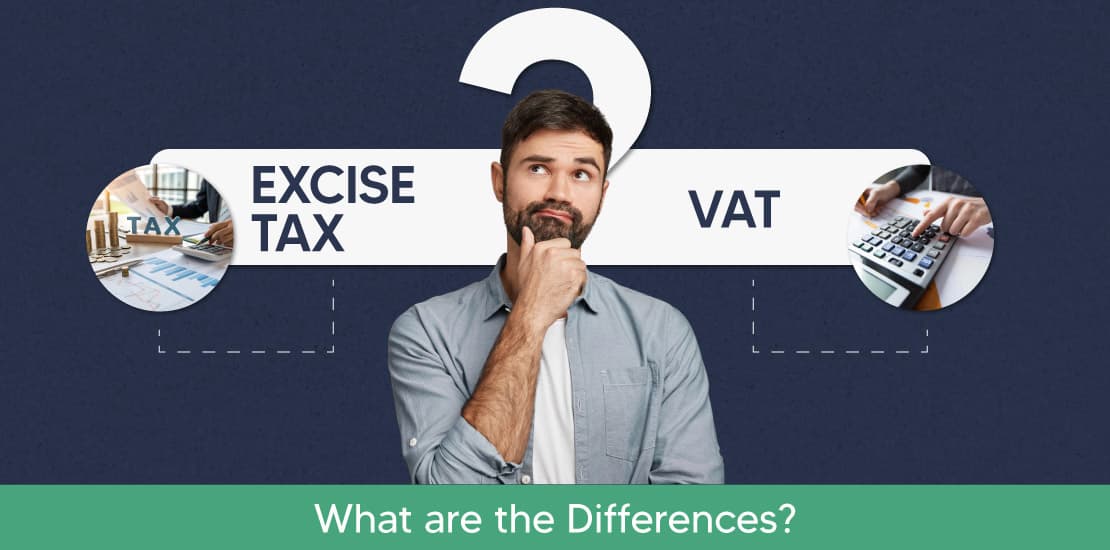
Understanding the excise tax vs VAT in the UAE is essential for businesses and consumers alike, as both taxes serve different purposes within the country’s economic framework. VAT is a broad-based tax applied to most goods and services at every stage of the supply chain.
Whereas excise tax is imposed on specific products that may be harmful to health or the environment, such as tobacco and sugary drinks. Exploring the differences between excise tax and VAT in the UAE helps businesses ensure compliance, manage costs effectively, and make informed financial decisions in a competitive market.
What is VAT in the UAE?
VAT (Value Added Tax) in the UAE is an indirect tax levied on most goods and services at every stage of the supply chain, from production to final sale.
Introduced on 1 January 2018, VAT in the UAE is applied at a standard rate of 5%. Businesses collect this tax from customers on behalf of the government and later pay it to the authorities.
In simple terms, VAT is a consumption tax ultimately paid by the end of consumer, while businesses act as intermediaries, collecting and remitting it.
Benefits of VAT in the UAE
Here are the key benefits of VAT in the UAE:
- Supports Government Revenue: VAT provides a steady source of income for the UAE government. This helps fund public services like healthcare, education, and infrastructure without relying only on oil revenue.
- Boosts Economic Stability: By creating an additional revenue stream, VAT helps make the UAE economy more stable and less dependent on fluctuating oil prices.
- Encourages Transparency: VAT requires businesses to maintain proper financial records. This improves transparency and reduces chances of tax evasion.
- Promotes Better Business Practices: Businesses become more organised with accounting, invoicing, and compliance, leading to more professional operations.
- Low Tax Burden: With a standard rate of just 5%, VAT in the UAE is relatively low compared to many other countries, making it business friendly.
- Shared Responsibility: VAT is collected in small amounts at each stage of the supply chain, so the tax burden is distributed rather than borne by a single party.
- Supports Public Development: The revenue generated from VAT contributes to the development of roads, public transport, and other essential infrastructure.
Overall, VAT helps the UAE maintain a strong economy while continuing to provide high-quality public services.
What is Excise Tax in the UAE?
Excise Tax in the UAE is an indirect tax imposed on specific goods that are considered harmful to human health or the environment.
Introduced in 2017, this tax is applied to products such as tobacco, energy drinks, soft drinks, and electronic smoking devices. The main purpose of the excise tax is to reduce the consumption of these harmful products and promote healthier choices.
Unlike VAT, which applies to most goods and services, excise tax is charged only on selected items, often at higher rates, such as 50% or 100%, depending on the product.
Benefits of Excise Tax in the UAE
Here are the key benefits of the Excise Tax in the UAE:
- Promotes Healthier Lifestyles: An excise tax is applied to harmful products such as tobacco and sugary drinks, making them more expensive. This encourages people to reduce consumption and adopt healthier habits.
- Reduces Harmful Consumption: By increasing prices, the tax helps reduce demand for products that can harm health and the environment.
- Generates Government Revenue: Excise tax provides an additional source of income for the UAE government, which can be used to fund public services and development projects.
- Supports Public Health Initiatives: The revenue collected can be used for healthcare programs, awareness campaigns, and preventive measures to improve overall public health.
- Protects the Environment: Some taxed products, such as certain beverages and tobacco products, have environmental impacts. The tax helps reduce their usage and promote sustainability.
- Targets Specific Products: Unlike VAT, excise tax focuses only on selected harmful goods, ensuring that essential items remain affordable for consumers.
Overall, excise tax in the UAE helps create a healthier society while also supporting economic and social development.
Key Differences Between VAT and Excise Tax in the UAE
Here’s a table which will help you know the key differences between the excise tax vs VAT in the UAE:
| Basis of Comparison | VAT (Value Added Tax) | Excise Tax |
|---|---|---|
| Definition | VAT is a general consumption tax applied to most goods and services at every stage of the supply chain. | Excise tax is an indirect tax imposed on specific goods that are harmful to health or the environment. |
| Purpose | The main purpose of VAT is to generate revenue for the government through everyday transactions. | Excise tax aims to reduce the consumption of harmful products like tobacco, sugary drinks, and energy drinks. |
| Scope of Application | VAT applies broadly to most goods and services across various industries. | Excise tax applies only to selected products such as tobacco, carbonated drinks, and energy drinks. |
| Tax Rate in UAE | The standard VAT rate in the UAE is 5%. | Excise tax rates vary: 50% on carbonated drinks, 100% on tobacco, and energy drinks. |
| When It Is Applied | VAT is charged at each stage of production and distribution, with the final burden on the end consumer. | Excise tax is usually applied at the production or import stage. |
| Who Pays the Tax | The end consumer ultimately bears the VAT, while businesses collect and remit it to the government. | Businesses (manufacturers/importers) pay excise tax, but the cost is often passed on to consumers. |
| Input Tax Recovery | Businesses can claim input tax credit on VAT paid for business expenses. | Input tax recovery generally does not apply to excise tax. |
| Impact on Pricing | VAT slightly increases the final price of most goods and services. | Excise tax significantly increases the price of specific harmful goods to discourage consumption. |
| Registration Requirement | Businesses must register for VAT if they meet the mandatory threshold. | Businesses dealing with excise goods must register under excise tax regulations. |
| Economic Impact | VAT supports overall economic growth and government revenue without targeting specific products. | Excise tax helps improve public health and reduce harmful consumption. |
When comparing excise tax vs VAT, VAT is a broad-based tax applied to most goods and services, while excise tax is selective and targets specific harmful products. Understanding these differences between excise tax and VAT in the UAE helps businesses stay compliant and plan their pricing strategies effectively.
Products Covered Under VAT and Excise Tax in the UAE
In the UAE, both VAT (Value Added Tax) and Excise Tax apply to different types of products. While VAT is charged on most goods and services, Excise Tax is only applied to specific items that are considered harmful to health or the environment.
Products Covered Under VAT in the UAE
VAT in the UAE is generally applied at a standard rate of 5% on most goods and services. This includes:
- Electronics (mobile phones, laptops, home appliances)
- Clothing and fashion items
- Food and beverages (except certain essential items that may be zero-rated)
- Automobiles and spare parts
- Real estate (commercial properties)
- Hospitality services (hotels, restaurants, tourism services)
Some goods and services may be zero-rated or exempt, such as basic healthcare, education, and certain essential food items.
Products Covered Under Excise Tax in the UAE
An excise tax is imposed on specific goods that are harmful to human health or the environment. These products are taxed at higher rates to discourage consumption.
Key products include:
- Tobacco and tobacco products (100%)
- Energy drinks (100%)
- Carbonated drinks (50%)
- Sweetened beverages (50%)
- Electronic smoking devices and tools (100%)
- Liquids used in electronic smoking devices (100%)
Key Difference in Product Coverage
The main difference lies in the scope:
- VAT applies broadly to most goods and services across various industries.
- Excise Tax applies only to a limited range of harmful products at higher tax rates.
How do Excise Tax and VAT Work Together in the UAE?
In the UAE, Excise Tax and VAT work together as part of a layered tax system. While they serve different purposes, they often apply to the same products, especially those considered harmful to health or the environment.
1. Excise Tax Comes First
Excise Tax is applied at the production or import stage on specific goods, such as:
- Tobacco products
- Energy drinks
- Carbonated drinks
- Sweetened beverages
It is usually charged at high rates (e.g., 50% or 100%) to discourage consumption. This tax is added before the product reaches the market.
2. VAT is applied on Top of the excise tax
Once the excise tax is added to the product value, VAT (5%) is calculated on the total price, which includes the excise tax.
Important Point:
VAT is not just applied to the base price; it is applied to:
(Original Price + Excise Tax)
3. Simple Example
Let’s say:
- Base price of a product = AED 100
- Excise Tax (50%) = AED 50
- New subtotal = AED 150
- VAT (5% on AED 150) = AED 7.5
Final price = AED 157.5
4. Why Both Taxes Are Used
- Excise Tax helps reduce the consumption of harmful goods
- VAT generates general government revenue from most goods and services
Together, they:
- Increase product prices (especially harmful ones)
- Encourage healthier choices
- Ensure steady tax income for the UAE
5. Key Takeaway
The main difference in how they work together is:
Why Understanding the Difference Matters in the UAE (Excise Tax vs VAT)?
A simple definition:
- VAT (Value Added Tax) is a general tax charged on most goods and services at every stage of the supply chain. In the UAE, it is usually 5% and is paid by the end consumer.
- An excise tax is a special tax applied only to specific harmful or luxury products, such as tobacco, energy drinks, and sugary drinks. It is usually charged at higher rates (like 50% or 100%) to discourage consumption.
In short:
VAT = applied to most products
Excise Tax = applied only to selected harmful products
Understanding this difference helps businesses price products correctly, stay compliant with UAE laws, and avoid penalties.
Excise Tax vs VAT in UAE: Key Takeaways by Shuraa Tax
In conclusion, understanding excise tax vs VAT is essential for anyone doing business or making purchases in the UAE. While VAT is a general tax applied to most goods and services, excise tax is specifically targeted at harmful products to reduce their consumption.
Knowing the differences between excise tax and VAT in the UAE helps businesses stay compliant, plan pricing strategies effectively, and avoid unnecessary penalties.
If you need expert guidance on VAT or excise tax compliance, Shuraa Tax is here to help you every step of the way.
Call us on +(971) 44081900, drop us a text on WhatsApp +(971) 508912062 or email us on info@shuraatax.com