Table of Contents
- What Is a Designated Free Zone in the UAE?
- Designated Free Zones and VAT: What Actually Changes?
- Designated Free Zones and UAE Corporate Tax
- The Complete List of Designated Free Zones in the UAE for 2026
- Common Misconceptions Businesses Should Avoid
- Key Compliance Points for Businesses in UAE Designated Zones
- Why Designated Zone Status Matters for Your Business Strategy
- Need Help Navigating VAT in Free Zones?
Most business owners setting up in the UAE know about free zones. But ask them what makes a designated free zone different, and you’ll often get a pause.
It’s an important distinction, not just on paper, but in how much VAT you pay, how you structure your transactions, and whether you’re FTA-compliant. If your business trades goods and operates from (or with) a UAE free zone, understanding this classification properly could save you from some expensive surprises.
Here’s everything you need to know, updated to May 2026.
What Is a Designated Free Zone in the UAE?
A designated free zone is a specific type of free zone that the UAE Cabinet has formally recognised as being outside the UAE for VAT purposes, but only when it comes to qualifying goods. This is not an informal classification. It flows directly from UAE VAT law (Federal Decree-Law No. 8 of 2017) and is operationalised through Cabinet Decision No. 59 of 2017, which defines the criteria and lists the qualifying zones.
So, what makes a zone “designated” rather than simply a free zone? To qualify, the area must:
- Be a physically fenced and enclosed geographic space
- Have dedicated security measures and customs controls that monitor entry, exit, and movement of goods
- Maintain clear internal procedures for storing, processing, and transferring goods
- Have its operator comply with FTA-prescribed procedures at all times
If a zone fails to maintain these conditions, its designation can be withdrawn, and the VAT treatment changes immediately.
A regular free zone, by contrast, operates fully within the UAE for VAT purposes. It may offer benefits like 100% foreign ownership, import duty exemptions, and profit repatriation, but none of those perks change how VAT applies to transactions in or out of that zone.
Designated Free Zones and VAT: What Actually Changes?
This is where things get practical. Here’s how VAT treatment differs once a zone carries designated status.
- Goods moved within the same designated zone: Not subject to UAE VAT, provided they remain under customs control.
- Goods transferred between two different designated zones: Also outside the scope of VAT, so no tax is charged at the point of transfer.
- Goods imported into a designated zone from outside the UAE: VAT suspension may apply, meaning businesses don’t pay VAT upfront at the point of import.
- Goods moved from a designated zone into UAE mainland: These are treated as imports into the UAE and are subject to 5% VAT at that point.
- Services provided within a designated zone: Here’s the catch that trips up many businesses, services do not benefit from the designated zone treatment. They are fully subject to standard UAE VAT rules, regardless of where the business is physically located.
This goods-versus-services distinction is critical. Two businesses sitting side by side in the same designated free zone can have completely different VAT obligations depending on whether they trade in goods or provide services.
Designated Free Zones and UAE Corporate Tax
With Corporate Tax now firmly in effect across the UAE (under Federal Decree-Law No. 47 of 2022), the question of how designated zones interact with CT obligations has become more relevant.
Being in a designated zone does not automatically qualify a business for the 0% Corporate Tax rate applicable to Qualifying Free Zone Persons (QFZPs). That status depends on a separate set of criteria, including the nature of income earned, whether the business maintains adequate substance, and whether it conducts qualifying activities.
Businesses need to verify their specific circumstances with a tax adviser, as the VAT classification of a zone and its Corporate Tax treatment are assessed independently. Mismatches between the two can attract additional scrutiny from the FTA.
One important reminder flagged by compliance professionals as of 2026: the FTA has stepped up enforcement and inspection activity. Accurate documentation of all goods transactions, clear zone verification, and proper classification of supplies as goods versus services are no longer optional; they are baseline compliance requirements.
The Complete List of Designated Free Zones in the UAE for 2026
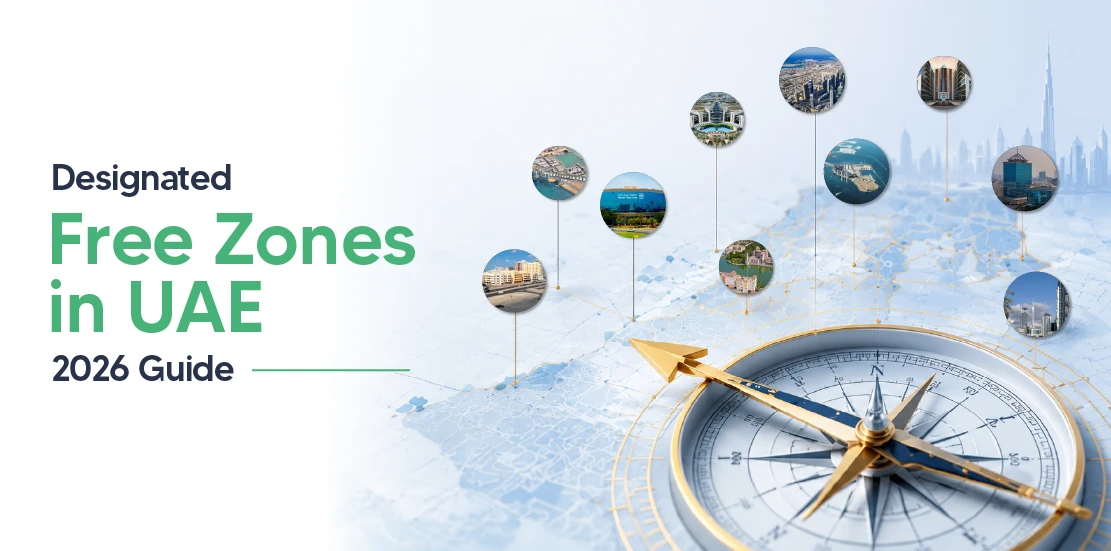
The following zones are officially recognised as designated free zones in the UAE under Cabinet Decision No. 59 of 2017 and its amendments. This list has been updated multiple times since the original 2018 implementation, so businesses should always cross-check their zone’s status against the current FTA-approved list before applying any special VAT treatment.
Abu Dhabi
- Free Trade Zone of Khalifa Port
- Abu Dhabi Airport Free Zone
- Khalifa Industrial Zone (KIZAD)
- Al Ain International Airport Free Zone
- Al Butain (Al Bateen) Executive Airport Free Zone
Dubai
- Jebel Ali Free Zone (JAFZA) – North and South
- Dubai Cars and Automotive Zone (DUCAMZ)
- Dubai Textile City
- Free Zone Area in Al Quoz
- Free Zone Area in Al Qusais
- Dubai Aviation City
- Dubai Airport Free Zone (DAFZA)
- International Humanitarian City – Jebel Ali
- Dubai CommerCity
Sharjah
- Hamriyah Free Zone
- Sharjah Airport International Free Zone (SAIF Zone)
Ajman
- Ajman Free Zone
Umm Al Quwain
- UAQ Free Trade Zone in Ahmed Bin Rashid Port
- UAQ Free Trade Zone on Sheikh Mohammed Bin Zayed Road
Ras Al Khaimah
- RAK Free Trade Zone (RAKEZ)
- RAK Maritime City Free Zone
- RAK Airport Free Zone
- Al Hamra Industrial Zone – Free Zone
- Al Ghail Industrial Zone – Free Zone
- Al Hulaila Industrial Zone – Free Zone
Fujairah
- Fujairah Free Zone
- Fujairah Oil Industry Zone (FOIZ)
This is the list of designated free zones in the UAE as compiled from the FTA’s official Cabinet Decision.
One note worth keeping in mind: Free zone brand names and the geographic areas listed in Cabinet Decisions do not always map neatly onto each other. For example, businesses licensed under DMCC should verify whether their specific premises fall within a designated area, rather than assuming zone-wide designation.
Common Misconceptions Businesses Should Avoid
“If I’m in a free zone, I don’t need to worry about VAT.”
Wrong. Free zone companies are subject to UAE VAT once they exceed the registration threshold. The designation only changes the treatment of specific goods transactions; it does not create a blanket exemption.
“My zone is on the list, so all my supplies are VAT-free.”
Not quite. Services remain taxable regardless. The VAT benefit only applies to goods, and only when the conditions around customs control and documentation are properly met.
“I don’t need to register for VAT because I’m in a designated zone.”
Also incorrect. If taxable supplies and imports exceed the FTA threshold, registration is mandatory regardless of zone status.
“DMCC is a designated zone.”
This is a common assumption that needs careful verification. DMCC is one of the UAE’s most prominent free zones, but businesses should confirm whether their licensed premises physically fall within a designated area as defined in the Cabinet Decision, rather than relying on brand recognition alone.
Key Compliance Points for Businesses in UAE Designated Zones
If you operate in or transact with a designated free zone, these are the practical obligations you need to stay on top of:
- Document everything: The FTA requires businesses to maintain records of all goods movements including proof that goods remained under customs control when VAT exemption is being claimed. Gaps in documentation have been a leading cause of back-assessments in FTA audits.
- Verify counterparty status: Before applying zero-rating or out-of-scope treatment on a transaction, confirm that the other party’s zone is also designated. A transaction with a non-designated zone changes the VAT treatment entirely.
- Classify goods and services correctly: The distinction between a supply of goods and a supply of services must be carefully assessed for each transaction, not just at a business level but on a transaction-by-transaction basis.
- Register for VAT if required: Free zone status does not create a VAT registration exemption. If your taxable turnover crosses the mandatory threshold (AED 375,000), registration is compulsory.
- Stay updated: The FTA’s list of designated zones has been amended multiple times since 2017. A zone that was designated when you set up may have had its status revised, or new zones may have been added since. Always check the current version before filing.
Why Designated Zone Status Matters for Your Business Strategy
For businesses that deal primarily in goods, particularly those involved in re-export, warehousing, distribution, or manufacturing, operating from a designated free zone in the UAE can meaningfully reduce VAT friction and working capital tied up in upfront tax payments.
For businesses that provide services, the designated zone status offers fewer direct VAT advantages, but the zone’s other benefits – infrastructure, strategic location, customs connectivity may still make it the right operational choice.
Either way, understanding exactly which category your business and transactions fall into is the starting point for proper tax planning. Getting this wrong can result in underpaid VAT (with penalties), or overpaid VAT (with cash flow implications), neither of which is a comfortable position.
Need Help Navigating VAT in Free Zones?
The rules around designated zones are precise, and the FTA’s compliance expectations have increased noticeably in 2026. Whether you’re newly setting up in a designated zone or reviewing your existing structure, having a clear picture of your VAT and Corporate Tax obligations is essential.
Shuraa Tax works with businesses across the UAE’s free zones on VAT registration, compliance reviews, FTA correspondence, and structuring advice. Get in touch with our team to understand exactly where your business stands.