Table of Contents
- Quick Overview: Designated Zones vs Free Zones
- What Is a Free Zone?
- Key benefits of operating in a free zone generally include:
- What Is a Designated Zone?
- Designated Zones vs Free Zones: How VAT Works
- Designated Zones and Corporate Tax: A Separate Set of Rules
- Side-by-Side Comparison: Designated Zones vs Free Zones
- Common Mistakes to Avoid
- How Shuraa Tax Can Help
- Frequently Asked Questions
If you run a business in the UAE, or you’re planning to set one up, you’ve almost certainly come across both terms: free zone and designated zone. And it’s easy to assume they mean the same thing, or that one is just a fancier version of the other. They’re not.
The difference between a designated zone and a free zone in the UAE has real, tangible consequences for how your business is taxed, specifically under VAT and Corporate Tax. Getting it wrong doesn’t just cause paperwork headaches; it can result in back-assessments, penalties, and unwanted attention from the Federal Tax Authority (FTA).
Quick Overview: Designated Zones vs Free Zones
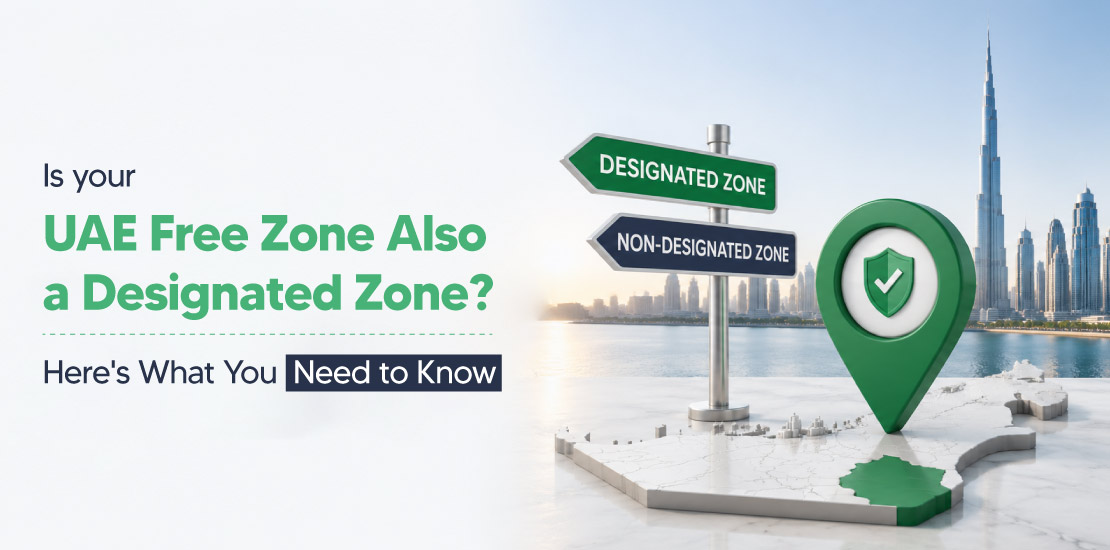
All designated zones are free zones, but not all free zones are designated zones.
Free zones offer business-friendly perks like 100% foreign ownership, no import duties within the zone, and ease of setup. But for VAT purposes, most free zones are treated exactly like the UAE mainland, meaning standard 5% VAT applies.
Designated zones are a specific subset of free zones that the UAE Cabinet has formally listed under Cabinet Decision No. 59 of 2017 (as updated). For goods transactions, these zones are treated as being outside the UAE for VAT purposes, which means VAT may not apply in certain qualifying scenarios.
That one distinction can significantly affect your supply chain costs, cash flow, and compliance obligations.
What Is a Free Zone?
A free zone (or freezones, as they’re commonly called) is a designated geographic area in the UAE set up to attract foreign investment and international business. The UAE has over 40 free zones – from IFZA, DMCC and DIFC in Dubai to RAKEZ, KIZAD, and beyond.
Key benefits of operating in a free zone generally include:
- 100% foreign ownership, no need for a UAE national sponsor
- Full repatriation of profits
- No customs duties on goods within the zone
- Streamlined company registration and licensing
However, and this is the part that trips up a lot of business owners, being in a free zone does not automatically give you special VAT treatment. Unless your specific free zone has been formally listed as a Designated Zone, VAT on Free Zone rules apply to you the same way they do to a mainland company.
What Is a Designated Zone?
A designated zone is a free zone that meets strict criteria set by the FTA and has been formally recognised through a Cabinet Decision. As of 2026, there are 23 officially designated zones in the UAE.
To qualify and maintain designated zone status, an area must:
- Be a clearly defined geographic location with physical fencing or boundary controls
- Operate under customs authority oversight with specific protocols for goods movement
- Have internal security and surveillance systems in place
- Follow FTA-prescribed procedures for all inbound and outbound goods
Some of the most well-known designated zones include the International Free Zone Authority (IFZA), Jebel Ali Free Zone (JAFZA), Dubai Airport Free Zone (DAFZA), Abu Dhabi Airports Free Zone (ADAFZ), Khalifa Industrial Zone Abu Dhabi (KIZAD), and Hamriyah Free Zone.
The FTA actively monitors these zones and can remove designated status if compliance standards slip. So it’s not a one-time classification – zone authorities and businesses operating within them need to maintain compliance on an ongoing basis.
Important: Always verify a zone’s status on the official FTA website. Assuming a zone is designated without checking is one of the most common causes of VAT errors.
Designated Zones vs Free Zones: How VAT Works
This is where it gets important for your tax position.
In a Regular Free Zone (Non-Designated)
Standard UAE VAT rules apply. If your taxable supplies exceed AED 375,000 annually, you must register for VAT. All supplies of goods and services are subject to 5% VAT, with zero-rating or exemptions only where specifically provided by law (for example, exports outside the GCC).
In short: being in a non-designated free zone gives you zero special VAT status.
In a Designated Zone
For goods only, designated zones are treated as being outside the UAE. This means:
- Goods imported into a designated zone from outside the UAE, and kept within the zone, are not subject to VAT at the point of import
- Goods transferred between designated zones are generally outside the scope of VAT
- Goods moved from the designated zone to the UAE mainland are treated as an import and become subject to VAT
Services are a different matter entirely. Even within a designated zone, the supply of services follows standard UAE VAT rules. This catches a lot of businesses off guard, particularly those in logistics, consulting, and technology sectors operating from JAFZA or DAFZA.
VAT registration thresholds also still apply. Just because you’re in a designated zone doesn’t mean you can opt out of registering for VAT if you meet the threshold.
Designated Zones and Corporate Tax: A Separate Set of Rules
Here’s something many business owners don’t realise: the VAT treatment of a designated zone and its Corporate Tax treatment are two completely separate things.
For VAT, designated zones are treated as outside the UAE. For Corporate Tax, they are treated as inside the UAE, but they offer a pathway to a 0% tax rate if specific conditions are met.
Under the UAE Corporate Tax Law (Federal Decree-Law No. 47 of 2022), businesses in free zones, including designated zones, can qualify as a Qualifying Free Zone Person (QFZP) and pay 0% Corporate Tax on qualifying income. The standard rate for non-qualifying income is 9%.
To maintain QFZP status, a business must:
- Be incorporated or registered in a recognised UAE free zone
- Maintain adequate substance within the free zone
- Earn qualifying income as defined under Cabinet Decision 100 of 2023 (as amended by Ministerial Decision 229 of 2025)
- Not earn non-qualifying revenue exceeding 5% of total revenue or AED 5,000,000 (whichever is lower)
- Prepare and maintain audited financial statements
Losing QFZP status, even by breaching the de minimis rule in a single period, means all your income reverts to the 9% rate for that year and the following four tax years. It’s a significant consequence, and one that requires active monitoring.
Side-by-Side Comparison: Designated Zones vs Free Zones
Here’s a quick summary of the key differences between Designated Zone and Free Zone:
Feature |
Free Zone |
Designated Zone |
| FTA/Cabinet Recognition for VAT | No special VAT status | Formally listed under Cabinet Decision No. 59 of 2017 |
| VAT Treatment – Goods | Standard UAE VAT (5%) applies | Outside the scope of VAT for qualifying goods transactions |
| VAT Treatment – Services | Standard UAE VAT (5%) | Standard UAE VAT (5%) applies; no special exemption |
| VAT Registration Requirement | Required if VAT registration threshold is met | Required if VAT registration threshold is met |
| Corporate Tax | Taxable; Qualifying Free Zone Person (QFZP) benefits may be available | Taxable; Qualifying Free Zone Person (QFZP) benefits may be available |
| Physical Requirements | No specific physical requirements for VAT purposes | Must be a fenced, customs-controlled area supervised by the FTA and relevant authorities |
| Examples | Dubai Media City, DMCC, Dubai Internet City | IFZA, JAFZA, DAFZA, KIZAD, Hamriyah Free Zone |
Common Mistakes to Avoid
A large number of businesses operating in UAE free zones are getting their VAT treatment wrong. Here are the most frequent errors the FTA picks up:
- Assuming all free zones are designated zones. They’re not. Always verify the status of your specific zone on the FTA’s official website.
- Applying designated zone VAT treatment to services. The ‘outside the UAE’ status applies to goods only. Services are always subject to standard UAE VAT.
- Using outdated information. The designated zone list is updated periodically. A zone that held designated status when you set up your business may not still qualify — or vice versa.
- Missing or incomplete customs documentation. This is the most common reason for FTA audit adjustments in designated zones. Clear shipping and movement records are essential.
- Not verifying your counterparty’s zone status. If you’re zero-rating a goods transaction because your buyer is supposedly in a designated zone, you need to confirm their status independently.
- Treating VAT registration as optional. The AED 375,000 threshold applies regardless of which zone you’re in.
How Shuraa Tax Can Help
Understanding the designated zone vs free zone distinction requires more than a general understanding of the rules; it requires mapping your specific transactions, your zone’s current FTA status, and your VAT /Corporate Tax filing position together.
At Shuraa Tax, we work with businesses across UAE free zones and designated zones to get this right. Whether you need a VAT health check, help structuring your supply chain to maximise legitimate tax benefits, or support with FTA registration and compliance, our team can guide you through it.
Don’t leave your tax position to assumption. Get in touch with Shuraa Tax today for a consultation.
Frequently Asked Questions
1. Is DMCC a designated zone?
DMCC (Dubai Multi Commodities Centre) is one of the UAE’s most popular free zones, but its designated zone status applies only to specific, physically fenced areas. If your licensed premises fall within the fenced portion, designated zone VAT treatment may apply to goods. If not, standard VAT rules apply. Always verify with your free zone authority and check the current FTA list.
2. Does being in a designated zone mean I don’t pay VAT?
Not exactly. It means certain goods transactions, specifically those that remain within or move between designated zones, may be outside the scope of VAT. Any goods sold or moved to the UAE mainland, and all services, are subject to standard VAT rules. You still need to register for VAT if your taxable supplies exceed the threshold.
3. Can I get 0% Corporate Tax in a designated zone?
Potentially, yes – but only if you qualify as a Qualifying Free Zone Person (QFZP) under the UAE Corporate Tax Law. This requires meeting a specific set of conditions, including adequate economic substance in the zone, qualifying income, and audited financials. It’s not automatic, and losing QFZP status has serious consequences.
4. What’s the difference between a designated zones and a free zones for a trading company?
For a trading business dealing in physical goods, the difference between a designated zone and a free zone can be substantial. In a designated zone, goods you import and store within the zone may be exempt from VAT at the point of import, and transfers to other designated zones are generally outside scope. In a regular free zone, you’d typically pay VAT on imports and charge it on sales to UAE-based customers. The right structure depends on your supply chain, customers, and business model.